Navigating the World of Cryptocurrency Investing
Introduction
The cryptocurrency market has emerged as one of the most talked-about areas of modern finance. Its rapid development, innovative technology, and potential for significant returns have attracted both individual and institutional investors.
For beginners, entering the crypto market can initially feel complicated. However, learning the fundamentals, starting with manageable amounts, and developing a disciplined approach can make the experience easier to understand.
Cryptocurrency investing begins with learning how digital assets function. Bitcoin, Ethereum, and thousands of other cryptocurrencies rely on blockchain technology, which enables transactions to be recorded across decentralized networks. Understanding this foundation can help new investors make more informed choices.
Understanding the Growing Cryptocurrency Market
The worldwide cryptocurrency ecosystem continues to develop as adoption, technological innovation, and investment interest increase.
The market has expanded beyond Bitcoin and Ethereum to include stablecoins, decentralized finance (DeFi), tokenized assets, blockchain applications, and other digital financial products.
Several developments are contributing to the expansion of the sector:
- Greater consumer awareness of digital assets
- Increasing institutional participation
- Growing use of blockchain-based applications
- Expansion of stablecoins and decentralized finance
- Rising cryptocurrency adoption in emerging markets
- Continued development of blockchain infrastructure
Regional adoption varies considerably, with some countries developing rapidly growing cryptocurrency communities while others are taking a more cautious regulatory approach.
The increasing participation of professional investors has also changed the cryptocurrency landscape. Businesses, financial institutions, and investment firms are becoming more involved in digital assets, contributing to greater attention and market development.
Benefit Title One
Short bolded lead-in followed by a sentence explaining this benefit.
Benefit Title Two
Short bolded lead-in followed by a sentence explaining this benefit.
Benefit Title Three
Short bolded lead-in followed by a sentence explaining this benefit.
How Beginners Can Get Started
Anyone considering cryptocurrency should begin with education rather than immediately making a large investment.
Start by learning essential concepts such as blockchain, wallets, exchanges, private keys, market capitalization, volatility, and transaction fees.
A simple starting process can include:
- Learn the fundamentals: Study how major cryptocurrencies and blockchain networks operate.
- Define your objectives: Decide whether you are interested in long-term investing or simply learning about the market.
- Evaluate your risk tolerance: Cryptocurrency prices can rise or fall dramatically.
- Select a reputable exchange: Research the platform’s security measures, reputation, fees, and regulatory status.
- Secure your holdings: Use strong passwords, two-factor authentication, and appropriate wallet security.
- Begin gradually: Consider starting with an amount you can afford to lose.
New investors should never feel pressured to purchase cryptocurrency simply because prices are rising. Understanding the asset and having a clear plan are more important than following market excitement.
Pros & Cons
An honest look at trade-offs helps set proper expectations.
First pro title
Description of this advantage.
Second pro title
Description of this advantage.
Third pro title
Description of this advantage.
First con title
Description of this drawback.
Second con title
Description of this drawback.
Third con title
Description of this drawback.
Building a More Disciplined Investment Strategy
After learning the fundamentals, investors can consider strategies designed to manage volatility and reduce emotional decision-making.
One commonly discussed approach is dollar-cost averaging (DCA). Instead of investing a large amount at once, an investor contributes a predetermined amount at regular intervals. This can reduce the temptation to make decisions based solely on short-term price movements.
Other approaches worth understanding include:
- Diversifying rather than concentrating everything in one cryptocurrency
- Establishing a predetermined investment budget
- Avoiding borrowed money for speculative investments
- Researching projects before purchasing their tokens
- Considering regulated investment products where appropriate
- Reviewing a portfolio periodically
A long-term mindset can be particularly useful in a market known for sudden price swings. Investors should focus on fundamentals, technology, adoption, and their own financial objectives instead of reacting to every market headline.
Conducting your own research, commonly referred to as DYOR, is an important part of responsible cryptocurrency investing.
Managing Cryptocurrency Investment Risks
Cryptocurrency can offer opportunities, but it also carries substantial risks. Prices can move sharply within short periods, and individual digital assets can lose significant value.
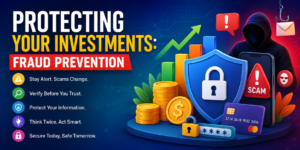
Security is another major concern. Investors may encounter phishing attempts, fraudulent projects, hacked accounts, fake investment schemes, and misleading online promotions.
Several precautions can help reduce avoidable risks:
- Use reputable and appropriately regulated platforms.
- Activate two-factor authentication whenever available.
- Create strong, unique passwords.
- Never disclose private keys or wallet recovery phrases.
- Be cautious about unsolicited investment opportunities.
- Avoid putting essential living expenses into speculative assets.
- Maintain an emergency fund separately from investment capital.
- Verify information before transferring cryptocurrency.
Investors should also understand that diversification does not eliminate risk. It can spread exposure across assets, but the cryptocurrency market as a whole can remain highly volatile.
Cryptocurrency Trends to Watch
The cryptocurrency industry is continuing to evolve, and several developments could influence its direction in the coming years.
Institutional adoption remains an important area to monitor. More traditional financial organizations are exploring digital assets, custody services, investment products, and blockchain-based solutions.
Stablecoins are another significant development. These digital assets are designed to maintain relatively stable values and are increasingly being explored for payments, transfers, and financial applications.
Other areas attracting attention include:
- Real-world asset tokenization
- Decentralized finance applications
- Blockchain-based payment systems
- Digital asset investment products
- Staking and blockchain network participation
- Artificial intelligence and blockchain integration
- Increasing cryptocurrency use in emerging economies
Regulation will also play an important role. Clearer rules may encourage responsible adoption while creating additional requirements for exchanges, financial institutions, and digital asset businesses.
Because the industry changes quickly, investors should regularly update their knowledge rather than relying on outdated assumptions.
Useful Resources for Learning About Crypto
Continuous education is one of the most valuable tools for anyone interested in cryptocurrency.
Beginners can explore educational material from established financial and cryptocurrency platforms. Courses, research reports, blockchain documentation, tutorials, and market data can help investors develop a better understanding of the sector.
Useful learning areas include:
- Blockchain fundamentals
- Cryptocurrency security
- Digital wallets
- Market analysis
- Token economics
- DeFi
- Stablecoins
- Regulatory developments
- Portfolio and risk management
Educational platforms and cryptocurrency research websites can provide useful starting points, but investors should compare information across multiple reliable sources.
Community discussions can also be helpful for discovering different perspectives, although information found on social media should always be independently verified.
Developing a Long-Term Approach
Successful cryptocurrency investing is not simply about finding the next asset that might increase dramatically in value. A sustainable approach requires patience, research, financial discipline, and careful risk management.
Investors should establish clear limits before purchasing digital assets. They should also understand why they are investing, how much risk they are comfortable taking, and what circumstances would cause them to change their strategy.
Avoiding emotional decisions is particularly important during periods of extreme market optimism or fear.
Instead of attempting to predict every short-term price movement, investors can focus on understanding the technology, evaluating projects carefully, and maintaining appropriate portfolio discipline.
Go to Official PageFinal Thoughts
Cryptocurrency has developed into a significant part of the broader digital finance ecosystem. Bitcoin, Ethereum, stablecoins, DeFi, tokenization, and blockchain applications continue to attract attention from individuals and organizations around the world.
However, potential opportunity comes with considerable risk. Cryptocurrency prices can be extremely volatile, scams remain a concern, and regulatory conditions can change.
For newcomers, the best starting point is education. Learn how cryptocurrencies work, choose platforms carefully, protect digital assets, invest only what you can afford to lose, and avoid making decisions based solely on hype.
With continuous learning, realistic expectations, and responsible risk management, investors can approach the cryptocurrency market with greater confidence and a clearer understanding of both its opportunities and limitations.
Frequently Asked Questions
First question goes here?
Answer text with key phrase bolded for emphasis.
Second question goes here?
Answer text with key phrase bolded for emphasis.
Third question goes here?
Answer text with key phrase bolded for emphasis.
Disclaimer: Cryptocurrency investing involves substantial risk and may result in the loss of capital. This article is provided for general educational and informational purposes only and should not be considered financial, investment, tax, or legal advice. Always conduct independent research and consider consulting a qualified financial professional before making investment decisions.